Climate Context for Central Italy
The Italian peninsula spans a wide range of climates within a short north-to-south distance. Central Italy sits primarily in the Csa classification (hot-summer Mediterranean) in coastal areas, transitioning to Csb (warm-summer Mediterranean) and Cfb (oceanic) at higher elevations in the Apennine foothills. The distinction matters for planting calendars: a Florentine suburban garden and an Umbrian hill garden at 400 metres above sea level may differ by two to three weeks in safe transplanting dates for frost-sensitive crops.
The dates in this calendar apply most accurately to lowland and coastal central Italy (below 300 metres elevation), with typical last frost dates between late February and mid-March. Gardens at higher elevations should adjust transplanting dates for tender crops forward by approximately two weeks per 200 metres of elevation.
Before standardised calendars, Italian gardeners used phenological indicators — the flowering of specific wild plants, the behaviour of insects, or the emergence of particular weeds — to judge planting readiness. The flowering of wild Cornus mas (cornelian cherry) in February was a traditional signal that the soil was warming. These observations, recorded in a botanical sketchbook alongside drawn plant profiles, remain a useful supplement to fixed-date calendars.
Month-by-Month Calendar
January — Dormancy and Planning
Little outdoor sowing is possible in most of central Italy during January. In heated glasshouses or on south-facing windowsills, early-season pepper (peperone) and aubergine (melanzana) varieties can be started from seed toward the end of the month. The primary activity for illustration-based record-keeping is reviewing previous season maps and preparing clean sheets for the coming year.
February — First Indoor Sowings
Tomato sowing under cover begins in the second half of February for most varieties, aiming for transplanting in early to mid-April. Slow-growing varieties — particularly large-fruited cuore di bue types — benefit from the earlier start. Garlic (aglio) cloves planted in autumn should be showing early growth; a botanical sketch of the emerging shoots documents the variety and condition before the foliage becomes indistinct from neighbouring plants.
March — First Outdoor Sowings
Hardy vegetables can be sown outdoors from mid-March in sheltered positions: lattuga (lettuce), spinacio (spinach), rucola (rocket), piselli (peas), and broad beans (fave). Annual herbs including aneto (dill) and coriandolo (coriander) can also be sown direct. Root vegetables including carrot and parsnip can be sown in prepared beds.
April — Main Transplanting Season Begins
After the last expected frost (typically late March in most lowland areas), pepper and aubergine seedlings can be transplanted to protected positions. Tomato transplanting generally proceeds from mid-April, with a second wave in early May for later plantings. Courgette (zucchini) and cucumber (cetriolo) are direct-sown outdoors from mid-April. This is the most active period for bed mapping: planting positions should be recorded as transplants go in, before the plants are large enough to obscure the overall layout.
May — Main Season in Progress
By late May, the main Italian kitchen garden is established. Ongoing sowings of salad leaves, radishes (ravanelli), and herbs provide a continuous harvest. Basil (basilico) — essential in Italian cooking and closely paired with tomatoes in traditional companion planting — should not be transplanted until night temperatures consistently exceed 12°C, typically around mid-May in central Italy.
| Month | Sow (outdoors) | Transplant | Harvest |
|---|---|---|---|
| March | Lettuce, spinach, peas, carrot | — | Overwintered greens |
| April | Courgette, cucumber, dill | Tomato (late), pepper, aubergine | Lettuce, spinach, broad bean |
| May | Basil, bean, further salads | Basil, tomato (second wave) | Early peas, lettuce |
| June–August | Autumn brassica (from July) | Autumn brassica seedlings | Tomato, courgette, bean, pepper |
| September | Spinach, rocket, winter lettuce | — | Ongoing summer crops; early garlic planting |
| October | Broad bean, garlic (cloves) | — | Last tomatoes, pepper, aubergine |
| November–December | — | — | Brassica, root vegetables, stored bulbs |
Summer — Peak Season Documentation
June through August is the most productive period for the central Italian kitchen garden, and the most demanding for record-keeping. Variety performance diverges rapidly during this period: some tomato cultivars reach full size by late July while others are still flowering. A monthly botanical sketch of selected varieties during peak growth captures information — plant height, foliage condition, fruit development stage — that is difficult to reconstruct after harvest.
Autumn — Second Planting Season
Central Italian gardens support a distinct autumn growing season. From late July onward, brassica seedlings are raised for autumn and winter harvest: cavolo nero (black kale), cavolfiore (cauliflower), broccolo (broccoli), and verza (savoy cabbage). These are transplanted in August and September. Garlic is planted in October for harvest the following summer.
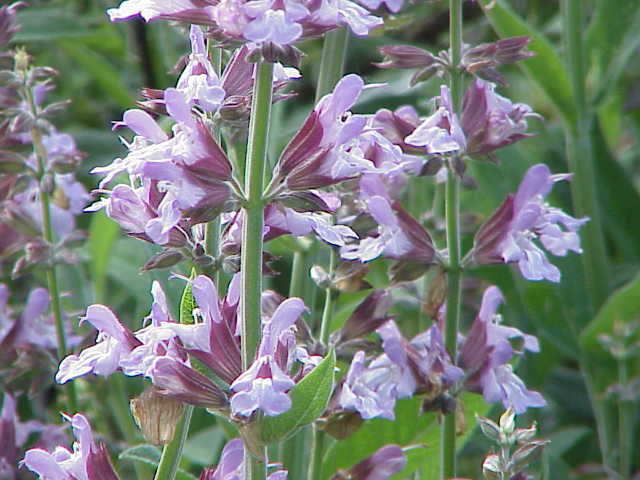
The autumn period is also relevant for botanical documentation of perennial herbs. Sage (salvia), rosemary (rosmarino), thyme (timo), and oregano (origano) all continue to show identifying characteristics through autumn and into winter; sketches made in October are often clearer than those made during the vigorous but less structured summer growth.
Elevation and Microclimate Adjustments
The Apennine foothills that characterise much of inland Tuscany and Umbria introduce significant local variation. A south-facing slope at 500 metres elevation may have a microclimate comparable to a lowland garden; a north-facing slope at the same elevation may experience frost two to three weeks later in spring. Walls, hedges, water bodies, and built structures all create microclimatic variation that a standard calendar cannot reflect.
Maintaining a phenological record — noting the date of first flowering for a fixed set of reference plants in the garden each year — creates a local microclimate record over time that is more accurate than any regional average. The flowering date of a specific rosemary bush, recorded for five successive seasons, provides a reliable proxy for spring warming conditions at that exact location.
Using the Calendar Alongside Illustrated Records
A planting calendar functions best as a prompt, not a prescription. The drawn garden map and variety sketches provide the specific details — this variety, this bed, these conditions — that the calendar cannot supply. Together they constitute a practical reference that improves in accuracy and usefulness with each season of use.